





























The Zcash Foundation said that it deployed a native Rust DNS seeder and expanded its seeder footprint from one instance to six, aiming to reduce single-point-of-failure risk and accelerate node bootstrapping. The change follows recent seeder outages that disrupted new-node connectivity and exposed how fragile peer discovery can become when too much depends on a narrow set of endpoints.
The Foundation also stated the seeder is open source and available for testing on both mainnet and testnet, explicitly inviting community review. By putting the implementation in public view early, the Foundation is signaling a “trust through verification” posture around performance and security claims.
What changed in peer discovery
The seeder is written in Rust and reuses the same networking logic as the Foundation’s Zebra full node, aligning the seeder’s network scanning behavior with the node’s own peer-handling heuristics. This shared code path is intended to reduce mismatches in peer identification and tighten the feedback loop when nodes search for peers under real-world conditions. The Foundation also pointed to Rust’s memory-safety properties as a way to lower the probability of common vulnerability classes while sustaining high throughput.
Architecturally, the new seeder is designed to answer DNS queries with minimal latency under load, using a lock-free approach to avoid bottlenecks during heavy bootstrap events. Operationally, that matters most when many nodes spin up at once and delays in peer-list delivery become the first choke point in time-to-sync. The implementation also adds per-IP rate limiting to mitigate abuse patterns such as DNS amplification, strengthening what had previously been a fragile entry surface during stress.
Redundancy, geography, and operational impact
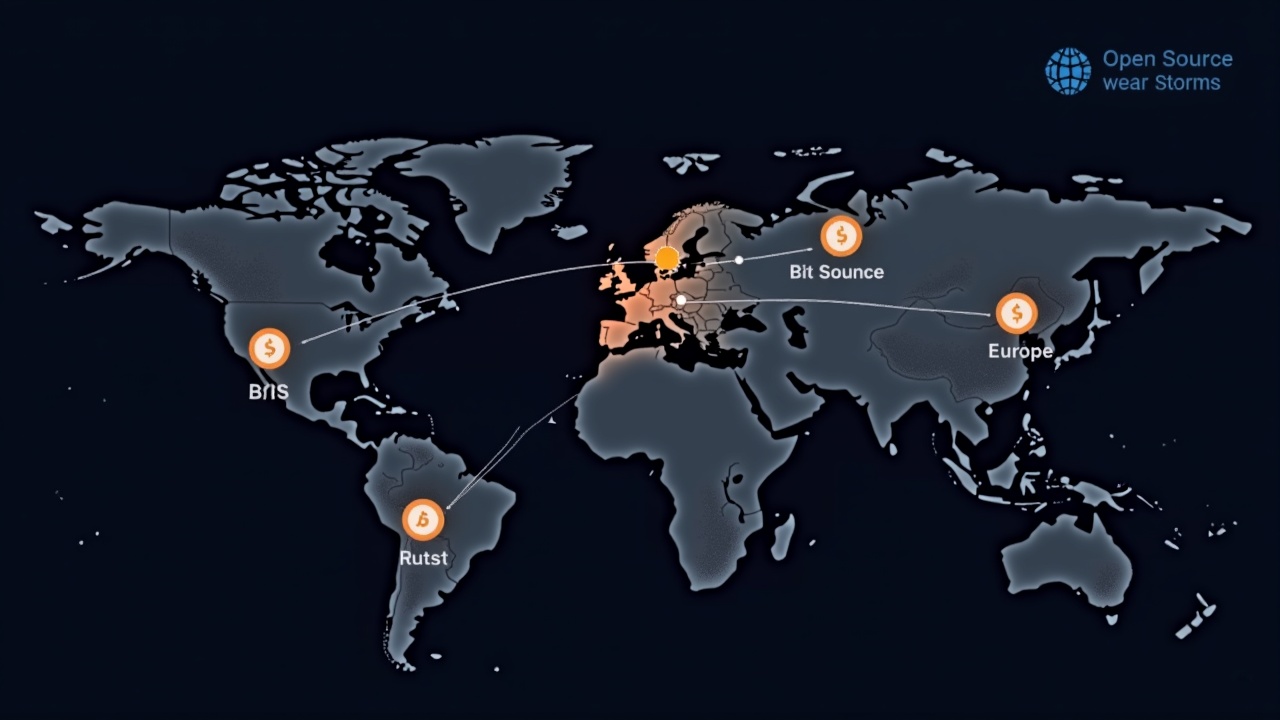
Beyond software design, the infrastructure footprint changed materially: the Foundation said it added five new seeder instances across the U.S. and Europe, bringing total redundancy to six. Geographic distribution is the practical control here, because losing a single region or host should no longer translate into a network-wide onboarding slowdown. For node operators, this reduces dependency risk when one seeder becomes unreachable, while still keeping availability and bootstrap success rates as metrics that should be continuously monitored.
For wallets and custodial treasury teams, the upgrade is positioned as a reduction in startup friction and a move toward more predictable peer discovery. Faster access to usable peer lists can shorten synchronization windows for fresh nodes, which directly improves time-to-first-usable-state for cloud-hosted or on-prem deployments. The same logic applies during incident recovery, where automated reboots and rapid spin-ups can compound seeder stress if protections are weak.
Looking ahead, teams running wallets, relays, and full nodes are likely to focus on measured validation on both testnet and mainnet—especially bootstrapping time, peer-discovery latency, and failure-rate reductions across regions. Those metrics will ultimately determine whether this change is merely an infrastructure refresh or a meaningful improvement to day-to-day reliability for production operators.