






























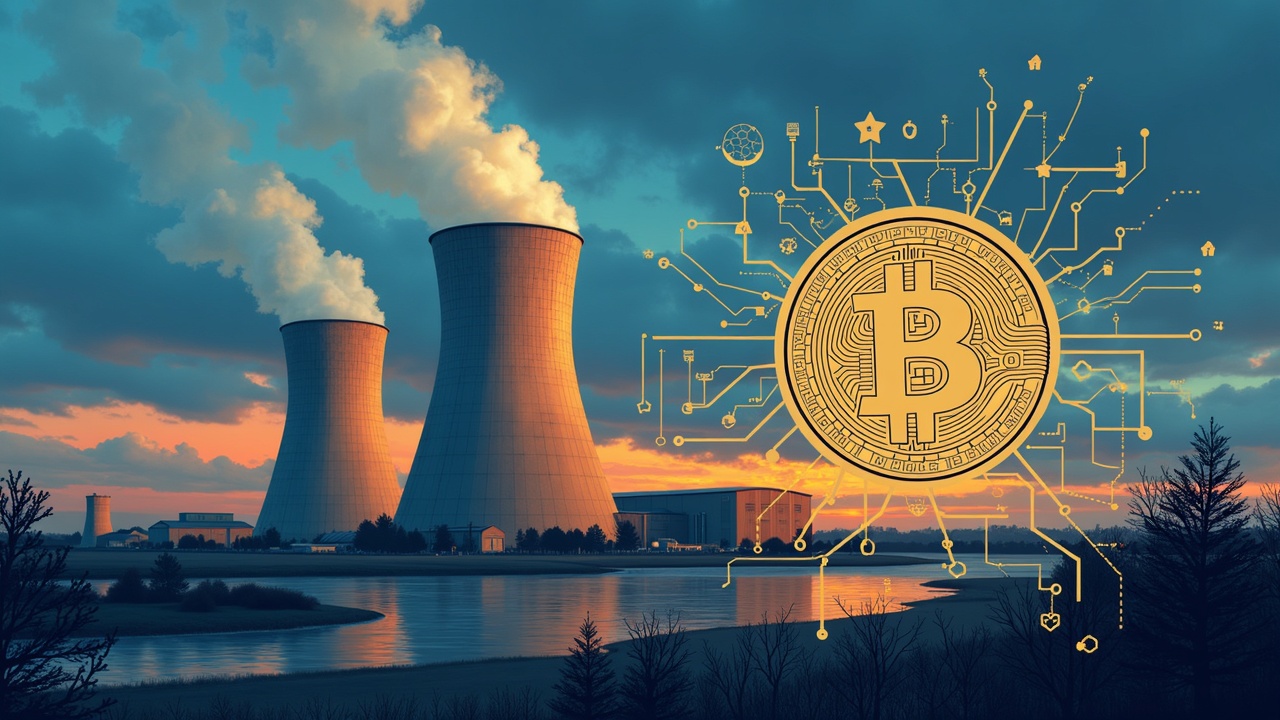
Russian President Vladimir Putin said that Moscow and Washington have discussed joint management of the Zaporizhzhia Nuclear Power Plant (ZNPP), with the United States reportedly interested in using the site’s output for Bitcoin mining. The narrative frames Bitcoin mining as the focal use case, linking energy supply constraints with digital-asset demand.
Why ZNPP power output is being linked to Bitcoin mining
Putin’s account casts the plant’s generation capacity as the primary attraction, citing a reported 136.8 GWh of electricity produced daily and describing it as well above local consumption. The proposal’s economic logic rests on the idea that surplus, low-cost electricity could support a highly energy-intensive Bitcoin mining operation. However, the text itself also signals that this premise collides with practical limits that undermine near-term feasibility.
The United States is discussing the possibility of jointly managing the Zaporizhzhia Nuclear Power Plant without Ukraine’s involvement, Putin said.
He claimed that the US is interested in using the plant for cryptocurrency mining. At the same time, Putin said that electricity… pic.twitter.com/5FwkysGQqP
— KyivPost (@KyivPost) December 25, 2025
Since March 2022, the facility has been under Russian military control and its six reactors are in safety shutdown, meaning they cannot supply power to Ukraine’s national grid. The plant’s current operating state is described as fragile, with critical cooling systems dependent on emergency diesel generators and exposed to frequent power disruptions tied to conflict-related infrastructure damage. For any large-scale computing deployment, the requirement is uninterrupted, predictable power, which the described conditions do not reliably provide. In this configuration, mining operations would face elevated operational risk, higher contingency power costs, and more complex logistics for equipment, maintenance, and uptime planning.
The discussions, as presented, reportedly excluded Ukrainian participation, creating a governance and legitimacy problem. International authorities, including the International Atomic Energy Agency, are described as maintaining that decisions about the ZNPP without Ukraine lack legitimacy. Ukrainian President Volodymyr Zelenskyy is described as urging a tripartite framework involving Ukraine and the U.S. while explicitly excluding Russia. This diplomatic gap introduces material uncertainty for any capital deployment, because institutional operators require clear legal title, sanctions exposure analysis, and sovereign stakeholder alignment before signing operational agreements.
Taken together, the proposal connects a theoretical energy surplus with a high-demand computing use case, but the plan presents as speculative under current conditions. Technical fragility and the absence of Ukrainian consent are positioned as the two binding constraints that prevent the concept from moving beyond discussion. For market participants and institutional treasuries, the immediate takeaway is higher political-risk premia and operational uncertainty for any project tied to ZNPP-linked power flows. Any perceived upside from cheap electricity is offset by governance ambiguity and reliability risks embedded in the plant’s described status.