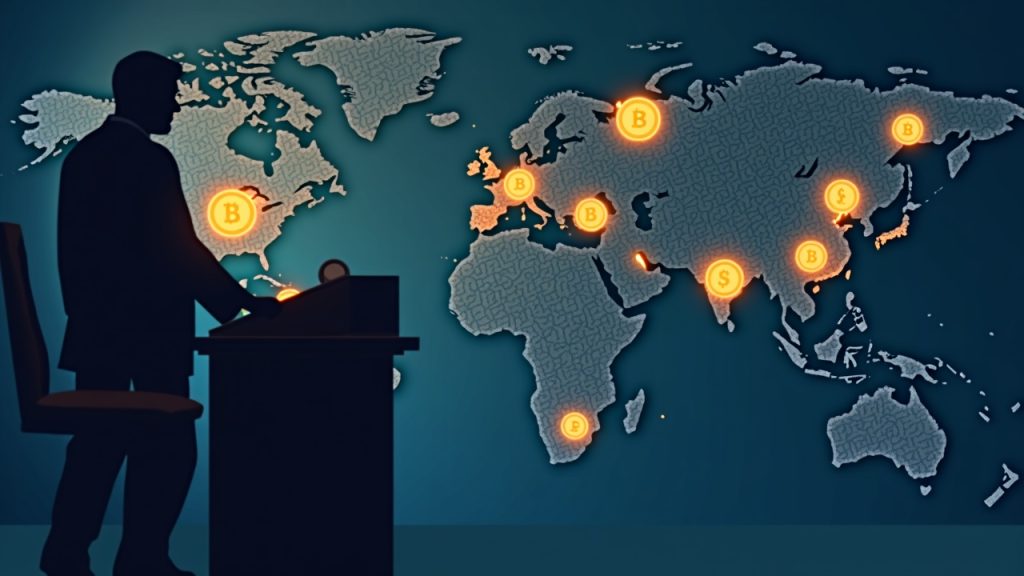































Morgan Stanley’s current hiring push reads like a deliberate shift from “crypto adjacency” to building proprietary, bank-grade rails for DeFi and tokenization. The roles being advertised focus on senior blockchain architects and engineers, and the stated objective is to compress private-market settlement cycles from days to minutes while positioning the firm for a share of an estimated $10 trillion RWA tokenization opportunity.
What makes this notable is the broader packaging: recruiting is being paired with signals of product execution across custody, wallets, retail access, and ETF plumbing rather than a single isolated initiative. In the same roadmap, the bank is linking in-house custody and wallet development with planned retail crypto access through E*Trade, plus filings for spot crypto ETFs that include staking exposure.
What the engineering build is really trying to unlock
The bank is effectively hiring for a translation layer that turns blockchain primitives into workflows that satisfy KYC/AML, auditability, strict key management, and permissioned controls. The job requirements emphasize deep smart-contract and crypto systems experience—specifically in Solidity, Rust, or Go—which implies they want builders who can operate across multiple chain environments rather than optimize for one stack.
From a product-engineering standpoint, the make-or-break factor is reducing friction without weakening controls, because multi-chain design can quickly turn into multi-step user pain. The practical UX pressure points are clear in how these systems behave in the real world: transaction signing becomes more complex, permission transparency must be explicit across custodial versus self-custody modes, and confirmation states have to be unambiguous for advisors and clients who expect deterministic settlement visibility.
This is where “minutes not days” becomes more than a slogan, because faster rails demand cleaner state transitions, clearer fee disclosure, and fewer moments where users feel stuck in a gray zone. If the bank wants advisor workflows to scale, it will need interaction heuristics that keep the number of steps per operation under control while still surfacing estimated fees, approvals, and finality in a way that stands up to compliance review.
Why the multi-chain stack matters for market structure
The architecture being referenced is positioned as a portfolio of rails, with each network mapped to a different balance of liquidity, cost, privacy, and institutional control. Ethereum is described as the maturity-and-liquidity lane for public DeFi and high-value RWA tokenization; Polygon is treated as the lower-cost throughput lane to reduce per-transaction friction; Hyperledger is earmarked for permissioned enterprise workflows with tighter data controls; and Canton is framed as an interoperability and confidentiality layer for complex institutional transfers.
In practical terms, that multi-chain posture is a risk-management decision as much as a technology decision, because it spreads execution across environments while concentrating governance in the bank’s own control plane. The upside is more flexibility in how products are routed; the trade-off is that compatibility, key management, and policy enforcement become the bank’s responsibility across multiple networks—meaning fewer places to hide if something breaks.
The timeline signals execution, not just exploration, because the same plan references a proprietary custody build and a self-custodied wallet targeted for a 2026 rollout that ties on-chain holdings to tokenized off-chain exposures. In parallel, Morgan Stanley is planning to introduce spot trading for Bitcoin, Ethereum, and Solana on E*Trade in the first half of 2026 via a Zero Hash partnership, while also filing S-1s for spot ETFs that include staking rewards for ETH—suggesting it’s thinking in terms of yield-aware access, not only price tracking.
If these deliverables land as described, the key KPI won’t be “supported chains,” it will be whether the workflows feel simpler even as the governance gets stricter. The near-term proof points are the E*Trade spot trading launch window in H1 2026 and the 2026 wallet rollout, because those are the moments where settlement speed, reconciliation clarity, and permission transparency will either reinforce trust—or create new operational friction.